A Brief History of Technical Communication and Nonlinear Media
| Year | Events |
|---|---|
| 800 to 400 B.C. | Greeks document scientific work |
| 1472 – 1519 | Leonardo da Vinci documents his discoveries and inventions |
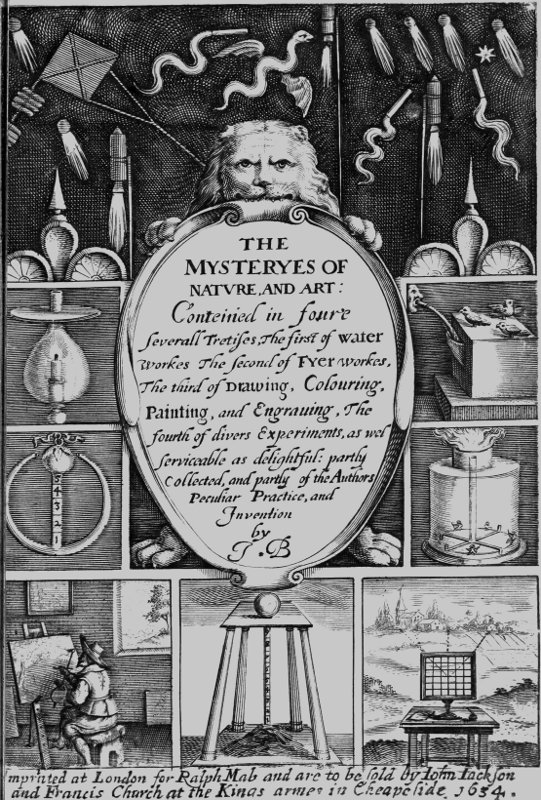
| Early 1700s | John Bates publishes “The Mysteryes of Nature and Art“, exploring various practical experiments and principles behind natural phenomena, divided into four treatises focusing on waterworks, fireworks, artistic techniques, and a collection of diverse experiments. |
| 1800s | Industrial revolution |
| 1900s | Beginning standardisation in the industrialised world requires documenting production and products. |
| 1949 | Joseph D. Chapline writes a user manual for the BINAC computer, becoming the first technical writer of computer documentation. |
| 1951 | An ad for a technical writer is published in the “Help Wanted” ads. |
| 1960 | The continued growth of technology, particularly in the electronics, aeronautics, and space industries, creates a big upsurge in demand for technical writers. |
| 1964 | Marshall McLuhan publishes “Understanding Media”, proclaiming that electronic communication media will soon turn the world into a “global village.” |
| 1965 | Ted Nelson coins the terms “hypertext” and “hypermedia” to describe a model of non-sequential writing and accessing information, stressing the connections among ideas. |
| 1968 | In The Mother of All Demos, Douglas Engelbart presents concepts, devices and technologies that will shape the future of modern computing |
| 1975 | The U.S. Government requires all product warranties to be stated clearly and unambiguously. |
| 1986 | The American National Standards Institute (ANSI) releases the Standard Generalized Markup Language (SGML), which later becomes the basis of several subset markup languages, including HTML. |
| 1987 | Early desktop publishing and page layout software begins appearing on writers’ desktops, including products like Aldus PageMaker and FrameMaker. |
| 1991 | ISO 9000 certification requirements create new job opportunities for technical writers. |
| 1999 | Technical writers begin using (markup languages based on) XML. |
| 1999 | Adobe InDesign is released into a desktop publishing world dominated by Quark XPress. |
| 2002 | The Sarbanes-Oxley Act of 2002 creates new opportunities for technical writers documenting policies, procedures, and internal controls. |
For more information on the history of Technical Communication + Publishing, see “History of Technical Writing”
↻ 2025-12-09